
In a world where speed, safety, and convenience define customer expectations, QR codes have quietly evolved into one of the most powerful tools for modern businesses. What started as a simple way to store information has transformed into a core driver of contactless experiences. Today, the rise of the QR code business ecosystem is reshaping how companies interact with customers, process payments, and automate operations.
QR codes have subtly developed into one of the most effective tools. It is for contemporary businesses in a world where customer expectations are defined by speed, safety, and convenience. What began as a straightforward method of storing data has evolved into a key component of contactless experiences. These days, the growth of the QR code business ecosystem is changing how businesses deal with clients, handle payments, and automate processes. Let’s explore in detail!
The Rise of Contactless QR Code Technology
The coronavirus outbreak brought about rapid implementation of contactless QR code solutions. However, their importance has only escalated since then. In different industries, ranging from retail, hospitality, health care, and logistics, businesses have been employing QR codes. It enables companies to limit physical interactions and improve productivity.
It has become second nature for consumers to scan menus in restaurants or check into hotels or retrieve their digital tickets. It indicates that there is a behavioral change in the long run, rather than a fleeting trend.
Even though contactless QR code solutions have been implemented rapidly due to the coronavirus outbreak, their importance has escalated ever since. Different companies, spanning industries such as retail, hospitality, health care, and logistics, have been using QR codes. It helps organizations to limit physical interactions and enhance productivity.
Consumers have made it their habit to scan menus at restaurants or check into hotels or get their digital tickets. It demonstrates that there is a behavioral change in the long run, rather than a transient trend.
QR Code Payments The Future of Seamless Transactions
Another important trend that needs to be mentioned is the implementation of the QR code payment method. Consumers can now make payments by scanning the QR codes without using cash, debit/credit cards, or any POS equipment.
There are multiple benefits to use QR code payments system:
- Faster checkouts
- Reduced operational costs for businesses
- Enhanced security and traceability
- Easy integration with mobile wallets and banking apps
With the development of fintech, it is clear that QR code payments will become prevalent in emerging markets. And it is also expanding further into developed economies.
Automation Through QR Codes
Another exciting advancement is QR code automation. Businesses are integrating QR codes into workflows to reduce manual tasks and improve accuracy.
For example:
- Inventory management systems use QR scans for real-time tracking
- Warehouses automate product sorting and shipping
- Customer onboarding processes are simplified through instant digital access
This level of automation not only saves time but also reduces human error, making operations more reliable and scalable.
Innovation Driving the Next Wave
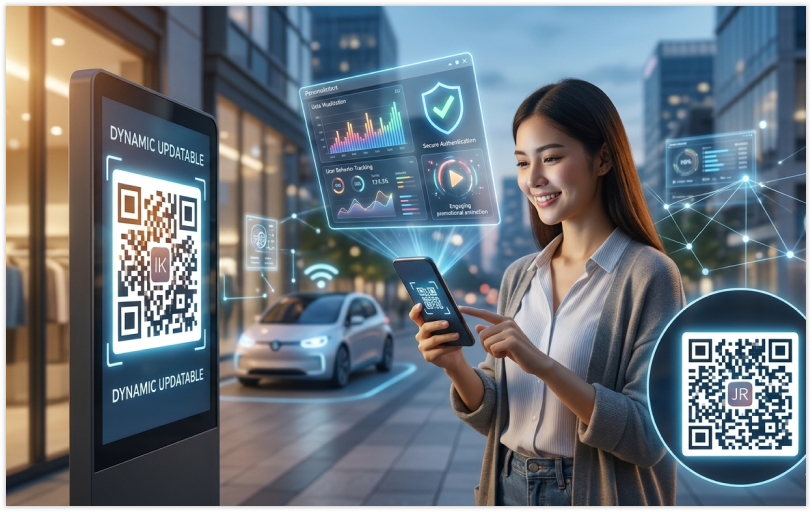
The future of QR codes is in QR code innovations. The static code is changing into more dynamic and digital QR code forms that are easily updatable without re-printing.
Some innovations are:
- Personalization of QR codes through user data
- Use of augmented reality (AR)
- Analytics for tracking users’ behavior
- Authentication for securing the identity of users
This is making QR codes smarter than simple data carriers.
Expanding QR Code Use Cases
The range of QR code use cases continues to expand across industries:
- Marketing campaigns with interactive content
- Smart packaging with product information and authenticity checks
- Healthcare systems for patient records and prescriptions
- Event management for seamless entry and engagement
Such diverse QR code applications demonstrate how versatile and adaptable the technology has become.
Why are Businesses Investing in QR Codes?
It’s now more of a necessity than a choice when it comes to using a business QR code strategy. Using QR codes will enable businesses to:
- Improve customer experience
- Facilitate contactless transactions
- Gather vital data insights
- Optimize operations
In spite of fierce competition among digital QR codes, businesses adopting the right QR codes have a huge competitive advantage.
Looking Ahead
The prospects for the QR code business industry are very good. With the increased computing power of smartphones and widespread Internet connectivity, the potential uses for QR codes will only increase as a means of connecting the physical world with the digital realm.
It is likely that there will be more convergence between the technology behind QR codes and artificial intelligence, the internet of things, and blockchain technologies. Whatever the case may be, the use of QR codes is going to be crucial for contactless business operations..
FAQs
1. What is a QR code payment system?
A QR code payment system is one that enables customers to complete payment via scanning a QR code through their smartphone. It is linking them directly to mobile wallets or banking applications.
2. Why do businesses require contactless QR codes?
Contactless QR codes allow for less physical contact between customers and staff members. This makes them essential in providing better hygiene and customer service at businesses.
3. How are QR codes utilized in business operations?
QR codes have a number of different uses within business operations. These include contactless payments, stock monitoring, marketing, customer onboarding, etc.
4. What industry benefits most from QR code technology?
Industries such as retail, healthcare, hospitality, logistics, and event management benefit greatly from QR code use cases due to their need for speed, accuracy, and contactless interactions.
5. Are QR codes secure for payments?
Yes, modern QR code payment systems are encrypted and use secure gateways which means that payments made via QR codes are safe.