
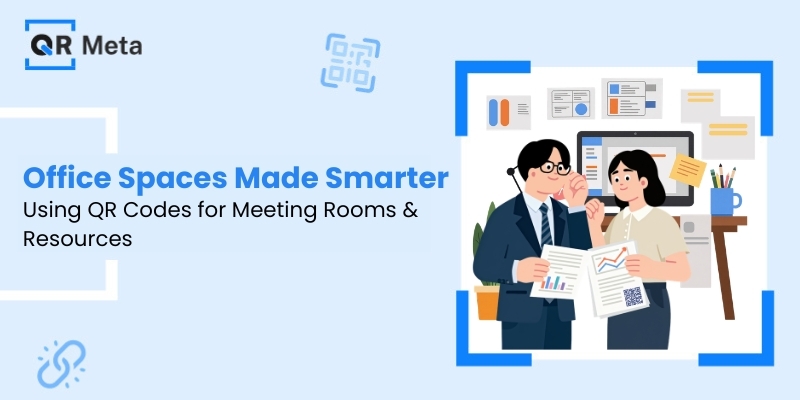
Today’s offices are not just about desks and meeting rooms. They have transformed into spaces that are dynamic and technology-driven. With hybrid work becoming the norm, organizations are always seeking innovative ways to optimize their office space, reduce friction, and improve employee experience. One such way could be through the use of QR codes.
QR codes play a significant role in office management in several ways. QR codes are quietly becoming a key part of the smart office solution.
Yet many offices still rely on outdated methods, such as printed directories that age fast, reception desks overloaded with admin tasks, and information buried behind permissions and passwords. Let’s explore why it’s time for workplaces to move beyond these old habits.
The Cost of Outdated Office Information Systems
When offices rely on manual or outdated systems, it creates more than just small issues. It directly affects productivity, security, and overall efficiency.
Visitor Bottleneck at Reception Desk
- Physical log books store confidential visitor information
- Receptionists are overloaded with arrivals and questions
- Creates delays and bad first impressions
Modern offices are now replacing manual entries with QR-based check-in systems to reduce waiting time and improve visitor management.
Information is Quickly Outdated
- Static directories and charts become obsolete quickly
- Updating takes time, energy, and printing costs
- Visitors frequently meet the wrong people or departments
Employees Spend Time Looking for Information
- Basic information, such as the WiFi password, manual, or form can be difficult to locate
- Interferences that happen often between employees
- Reduce productivity every day
Companies can simplify this process using solutions like Wi-Fi QR Codes for instant access to office connectivity and resources.
Challenges When Hiring New Staffs
- Critical information becomes trapped inside the paperwork
- Repetitive questions increase the work burden for HR
- Slows down the employee onboarding process
Brand Inconsistency Across Departments
- Different teams share inconsistent information
- Messaging becomes fragmented
- Confuses visitors and weakens brand identity
The Smarter Solution
Incorporating QR codes within smart office solutions ensures that such problems are addressed through the following ways:
- Quick access to up-to-date information
- Use of qr code tracking system for more insight
- Seamless qr code access control
Organizations also use QR code analytics dashboards to monitor scans, understand resource usage, and improve workplace efficiency.
If implemented appropriately, offices can effectively move towards becoming productive and data-oriented through the use of hybrid workplace solutions and a workplace management system.
The Shift Toward Smarter Workspaces
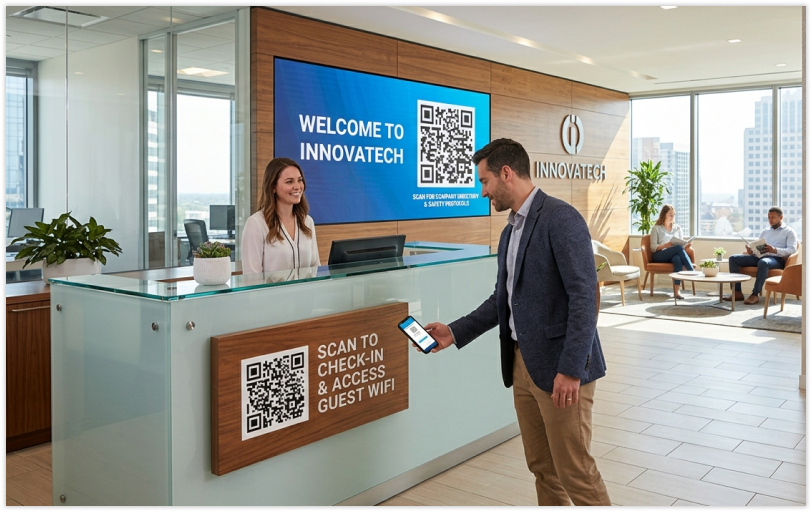
Your office lobby sets the tone for every visitor’s experience, but too often, it becomes a bottleneck. Guests wait for someone to notice them, receptionists juggle phone calls and paper logs, and employees waste time searching for information that should be easy to find.
Office QR Codes take this idea even further. With a simple scan, visitors can access company directories, Wi-Fi credentials, and safety protocols instantly. Employees can pull up training materials, manuals, and internal documents without having to dig through shared drives or waiting on IT support. The result is faster onboarding, better compliance, and a stronger first impression.
This is where a reliable workplace management system plays an important role in helping organizations track usage, optimize space, and streamline operations. QR codes enhance these systems by making interactions faster and more intuitive.
Better Security with QR Code Access Control
Another way that QR codes are contributing towards progress relates to security as well. As an alternative to conventional methods like ID card entry, QR code access control solutions can help.
Employees or visitors receive a unique QR code that can be scanned to:
- Enter specific areas
- Access meeting rooms
- Verify identity
This approach is contactless, secure, and easy to manage—especially useful in modern office environments.
Why QR Codes Fit Perfectly in Smart Offices?
It is easy to understand why companies find themselves gravitating towards QR codes; after all, QR codes eliminate any friction. No complicated setups are required, and there is no need to invest in costly equipment since the technology relies on equipment that people already have: their mobile phones.
QR codes enable you to turn your smart office into one which is:
- Organized
- Flexible
- User-friendly
Final Thoughts
As offices continue to advance, simplicity and efficiency will be key elements that determine the ideal office space. While QR codes may appear insignificant, their effects on the management of meeting rooms, desks, and access control systems cannot be overlooked.
From sharing the information system to workplace management systems, QR codes are revolutionizing the way offices function, one scan at a time.
FAQs
1. What are outdated office information systems?
Outdated office systems refer to manual or paper-based processes like logbooks, printed directories, and static resources that are difficult to update and manage efficiently.
2. How do outdated systems affect workplace productivity?
They slow down operations by making information hard to access, increasing interruptions, and causing employees to waste time searching for basic resources.
3. What problems do paper-based visitor systems create?
They can lead to security risks, privacy issues, and delays at reception, resulting in a poor visitor experience.
4. How can QR codes improve office management?
QR codes provide instant access to updated information, support qr code access control, and help streamline systems like meeting room booking system and desk booking system.
5. What is a QR code tracking system in offices?
A qr code tracking system helps monitor usage, track visitor activity, and gather data to improve workspace efficiency and resource management.
6. Why are smart office solutions important today?
Smart office solutions help businesses adapt to hybrid workplace solutions by improving efficiency, optimizing resources, and enhancing employee experience.