

Travel has changed dramatically in the digital era. Today’s tourists no longer want to depend entirely on printed brochures, tour guides, or long information boards to learn about historical landmarks and cultural destinations. Visitors expect instant access to information directly from their smartphones. This is where QR codes are transforming the tourism industry.
From museums and heritage buildings to monuments and cultural attractions, QR codes are becoming an essential part of modern tourism experiences. By simply scanning a code, visitors can instantly access historical details, audio guides, interactive maps, videos, multilingual content, and virtual experiences.
As smart tourism continues growing worldwide, destinations are adopting QR-powered solutions to improve visitor engagement, simplify information sharing, and create more immersive travel experiences.
In this blog, we’ll explore how QR codes are improving tourist information systems at historical and cultural sites while enhancing the overall museum visitor experience.
The Rise of Cultural Heritage Tourism
Cultural heritage tourism has become one of the fastest-growing segments of the global tourism industry.
Travelers today are increasingly interested in:
- Historical monuments
- Museums
- Cultural festivals
- Heritage sites
- Ancient architecture
- Traditional communities
Instead of simply visiting a place, tourists now seek meaningful experiences and deeper cultural understanding.
However, many heritage locations still rely on outdated communication methods such as printed signboards and brochures. These traditional systems often fail to provide engaging, multilingual, or interactive information for modern travelers.
This is where QR technology offers a smarter solution.
What Is a QR Code for Tourism?
A qr code for tourism is a scannable code placed at tourist attractions, monuments, museums, or cultural locations. When scanned using a smartphone, the QR code instantly provides digital information related to the site.
This may include:
- Historical background
- Audio guides
- Video tours
- Maps
- Visitor instructions
- Event schedules
- Language translations
- AR or VR experiences
Tourists no longer need to search online manually or rely on physical pamphlets. Everything becomes accessible through one quick scan.
This makes travel experiences faster, easier, and more interactive.
Smart Tourism Technology Is Changing Visitor Experiences
Smart tourism technology focuses on using digital tools to improve tourism management and visitor satisfaction.
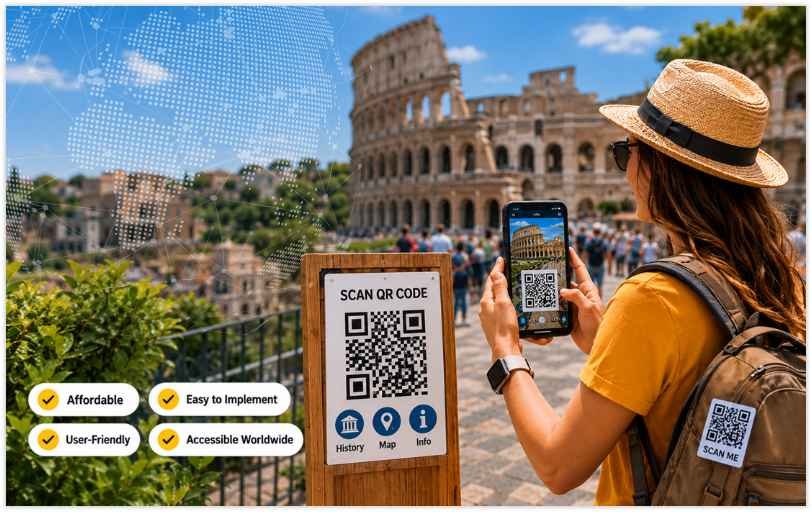
QR codes have become one of the most practical smart tourism solutions because they are:
- Affordable
- Easy to implement
- User-friendly
- Accessible worldwide
Tourism departments, museums, and cultural organizations are increasingly integrating QR systems into their visitor engagement strategies.
These QR-powered systems help destinations:
- Improve tourist convenience
- Reduce printing costs
- Offer multilingual support
- Deliver real-time updates
- Create interactive experiences
As smart tourism continues expanding globally, QR technology is becoming an important part of digital destination management.
QR Codes for Museums
Museums are among the biggest adopters of QR technology in tourism.
Traditional museums often depend on static information boards that provide limited details. Visitors may also face language barriers when exploring exhibitions.
QR codes for museums solve these problems by creating interactive and personalized experiences.
How Museums Use QR Codes
Digital Exhibit Information
Visitors can scan QR codes near exhibits to access:
- Artifact descriptions
- Historical timelines
- Artist information
- Cultural significance
Audio Tours
Museums can offer multilingual audio guides through QR codes, improving accessibility for international tourists.
Video Content
QR codes can link visitors to:
- Documentary clips
- Restoration videos
- Curator interviews
- Behind-the-scenes content
Contactless Experiences
Post-pandemic tourism has increased demand for touch-free interactions. QR systems allow visitors to access information without touching shared devices.
This improves both convenience and hygiene.
Digital Tourist Guide Systems
A digital tourist guide allows visitors to explore destinations independently using their smartphones.
Instead of hiring physical guides or carrying printed materials, tourists can simply scan QR codes throughout a destination.
Digital tourist guide systems can include:
- Interactive maps
- Walking routes
- Local recommendations
- Historical facts
- Cultural stories
- Food and shopping suggestions
This creates a self-guided tourism experience that is flexible and highly convenient.
Many smart tourism destinations now use QR codes to provide tourists with complete digital travel assistance.
Interactive Museum Guide Experiences
Modern travelers expect immersive experiences rather than passive sightseeing.
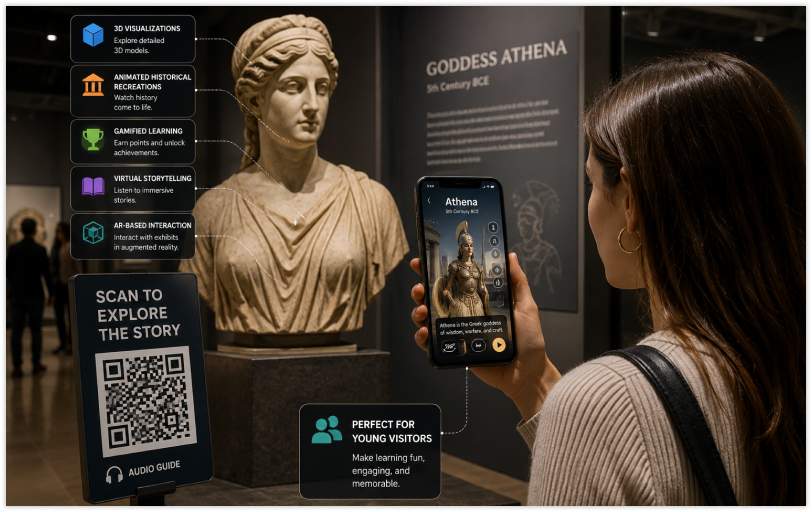
An interactive museum guide powered by QR codes allows visitors to engage more deeply with exhibits.
Interactive experiences may include:
- 3D visualizations
- Animated historical recreations
- Gamified learning
- Virtual storytelling
- AR-based exhibit interaction
This is especially effective for younger visitors who prefer technology-driven learning experiences.
Interactive QR-based systems also encourage visitors to spend more time at exhibitions, improving overall engagement.
Improving the Museum Visitor Experience
The museum visitor experience is no longer limited to viewing objects behind glass displays. Visitors now expect personalization, accessibility, and digital convenience.
QR codes improve visitor experiences by:
- Reducing confusion
- Providing instant information
- Supporting multiple languages
- Offering interactive learning
- Enabling self-paced exploration
Visitors can choose how deeply they want to explore an exhibit without feeling rushed.
Museums also benefit because QR systems help reduce dependency on printed materials and staff assistance.
Heritage Tourism and QR Technology
Heritage tourism focuses on preserving and showcasing historical and cultural identity.
QR codes help heritage destinations modernize visitor experiences while still protecting cultural authenticity.
At heritage sites, QR codes can provide:
- Historical narratives
- Restoration information
- Cultural significance
- Ancient maps
- Oral storytelling
- Preservation awareness
This allows tourists to understand the importance of cultural preservation while enjoying a more informative experience.
QR technology is especially useful at:
- Forts
- Palaces
- Archaeological sites
- Religious monuments
- UNESCO heritage locations
Cultural and Heritage Tourism in the Digital Era
Cultural and heritage tourism is evolving alongside technology.
Today’s travelers often plan trips online, use digital maps, and rely heavily on smartphones during travel. QR codes fit naturally into this digital behavior.
By implementing QR-powered systems, tourism organizations can:
- Modernize attractions
- Attract younger travelers
- Improve accessibility
- Offer multilingual content
- Increase visitor engagement
This creates a better balance between cultural preservation and modern tourism expectations.
Smart Tourism and Contactless Travel
Smart tourism became even more important after the global pandemic increased demand for contactless services.
QR codes now support:
- Contactless ticketing
- Digital payments
- Visitor registration
- Online reservations
- Digital feedback collection
Tourists prefer seamless experiences that minimize physical interaction while maximizing convenience.
Destinations adopting smart tourism strategies are better positioned to meet modern traveler expectations.
Benefits of QR Codes at Historical & Cultural Sites
Instant Information Access
Visitors can instantly learn about a location without waiting for guides or searching online.
Multilingual Support
QR systems can provide information in multiple languages for international tourists.
Lower Printing Costs
Digital information reduces the need for brochures and printed materials.
Real-Time Updates
Tourism authorities can update information instantly without replacing physical signs.
Enhanced Visitor Engagement
Interactive content creates more memorable travel experiences.
Environmentally Friendly
Reducing paper usage supports sustainable tourism practices.
Challenges of Traditional Tourist Information Systems
Many tourist sites still depend on:
- Printed signboards
- Paper maps
- Brochures
- Physical guides
These systems often create problems such as:
- Limited information space
- High printing costs
- Language barriers
- Outdated content
- Lack of interactivity
QR codes solve these challenges by digitizing tourist communication.
The Future of QR Codes in Tourism
As tourism technology continues advancing, QR systems are expected to integrate with:
- Artificial intelligence
- Augmented reality
- Virtual reality
- Smart city systems
- Real-time analytics
Future tourist experiences may include:
- Personalized guided tours
- AI-based recommendations
- Virtual heritage recreations
- Interactive storytelling
QR codes will continue playing a major role in making tourism smarter, more engaging, and more accessible.
Final Thoughts
QR codes are transforming how tourists explore historical and cultural destinations. From museums and heritage sites to monuments and galleries, QR-powered systems provide instant access to valuable information while improving visitor convenience.
As cultural heritage tourism and smart tourism continue growing globally, QR technology is becoming an essential tool for modern destination management.
Whether through digital tourist guide systems, interactive museum guide experiences, or smart tourism technology, QR codes help create more engaging, educational, and accessible travel experiences for visitors worldwide.
For tourism organizations, museums, and cultural institutions, adopting QR codes is no longer just a trend it is a practical step toward the future of tourism.
FAQs
1. What is a QR code for tourism?
A QR code for tourism is a scannable code that provides tourists with digital information such as guides, maps, videos, and historical details.
2. How are QR codes used in museums?
QR codes for museums provide exhibit information, audio tours, interactive experiences, and multilingual support for visitors.
3. What is smart tourism technology?
Smart tourism technology refers to digital tools and systems used to improve tourist experiences and destination management.
4. How do QR codes improve heritage tourism?
QR codes provide visitors with instant historical information, cultural stories, and interactive experiences at heritage sites.
5. What is a digital tourist guide?
A digital tourist guide is a smartphone-based travel guide that provides information, navigation, and recommendations through digital platforms or QR codes.
6. Why are QR codes important for cultural tourism?
QR codes improve accessibility, engagement, and convenience while helping destinations modernize tourist experiences.