


The healthcare industry is undergoing a silent revolution that involves its digitization. And while many complex systems can be mentioned in this context, it turns out that the simplest solution might prove to be the most efficient one, the QR code. What used to be a small square on product packaging is now becoming a key part of how clinics and hospitals manage and share patient information. I can say that from accessing lab results to issuing prescriptions, QR codes are reshaping the way medical data flows between providers and patients.
Now let’s have a closer look at how this happens.
The Growing Role of QR Codes in Healthcare
Implementing the QR code in hospitals is not just an experiment anymore. The clinics are embracing this technology due to its efficiency. There is no need to physically hand over documents or for patients to enter through complicated portals; rather, one simply needs to scan the code to access vital medical records instantly.
A properly designed QR code healthcare system will make it possible for patients to easily get their medical records, which can be anything from prescriptions to discharge papers or test results.
This shift is also part of a bigger move toward paperless systems, similar to what’s discussed in How QR Codes Are Powering the Shift Toward Paperless Marketing.
QR Codes for Medical and Patient Records
Keeping track of patient history has always been an uphill task. The old methods depend greatly on documentation or even incomplete online software. However, with the use of QR codes for patient history management, hospitals will be able to integrate all the medical history of a patient into one unique QR code.
Likewise, QR codes for patient records enable physicians to access any previous consultation, allergy, medications, and therapy plans from previous visits.
QR codes have become increasingly significant in emergency situations, where time is critical. If used in tandem with a hospital management system, QR codes can serve as a conduit between human and machine.
Simplifying Lab Reports Access
Having to wait for your lab report can be extremely frustrating, particularly when you have to make multiple appointments or send emails. With QR codes for lab reports, however, things work differently.
Upon completion of lab tests, the patient is provided with a QR code, either in print or digital form. The moment you scan this code, you will access your lab report right away.
Transforming Prescriptions with Digital Systems
Prescription is yet another field in which the QR code technology is creating a great deal of buzz. With the help of the digital prescription system, it becomes possible for doctors to issue their prescriptions digitally and tag them with a QR code.
The patient may then use that code to collect their prescription from the pharmacy. In that way, any problems arising out of poor handwriting and lost slips could be avoided. Digital prescriptions are an integral part of the electronic prescription system trend prevalent in modern medicine.
These systems not only improve accuracy but also help track medication history, ensuring safer and more consistent treatment.
Integration with Electronic Health Record Systems
This revolution is mainly driven by the use of the electronic health record system (EHR). QR codes do not substitute EHR systems, but they complement them.
Through integration of QR code into the EHR system, the ease with which patients and practitioners obtain pertinent information is improved as they will be able to obtain information easily without interacting with cumbersome computer software.
Supporting Hospital Record Management
Healthcare organizations with large hospitals handle huge amounts of data on a day-to-day basis. The application of QR codes in hospital record management systems would greatly help.
This is because the process from admission of a patient to their discharge report could all be linked using the QR code technology. Large healthcare organizations handle huge amounts of data every day.
Built-In Security and Privacy
The handling of medical information demands high security, and that’s exactly what QR technology offers:
- Dynamic control: Information may be updated without the need to change the QR code.
- Access security: The information can be opened through OTP or by logging in.
- Tracking access to information: Medical clinics can trace access to the information.
- Encryption: The data will be encrypted to ensure security as required by health organizations.
QR codes used with health information must be linked to an electronic health record system or hospital record management system. If you’re concerned about safety, you can explore QR Code Security: Tips to Avoid Scams and Malicious QR Codes.
Why Clinics Are Adopting QR Code Systems?
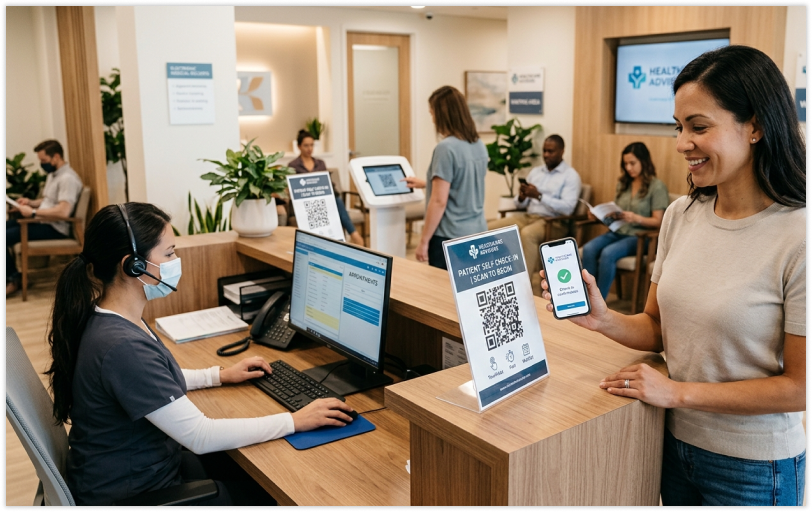
Here are a few definite reasons why the strategy is becoming popular:
- Speed: Information becomes available immediately after scanning.
- Accuracy: Fewer human mistakes in processing and decoding information.
- Convenience: No need for patients to carry their paperwork physically.
- Security: Information can be encoded for additional safety.
- Effectiveness: Reduced administrative work for medical personnel.
These benefits align closely with broader business use cases covered in Top 10 Benefits of Using Dynamic QR Codes for Business.
Why Patients Actually Prefer QR Codes?
As far as the patient is concerned, the transformation is not only technological but also functional:
- No requirement to bring physical files, since QR codes provide access to medical records.
- Easier collaboration with specialists through QR codes for patient records.
- Immediate access to reports without returning to the clinic.
- Improved readability over printed files.
This system even helps older people who can magnify, save, and refer to digital records at any time.
Final Thoughts
QR codes may appear to be an insignificant innovation; however, they can play a vital role in changing the dynamics of work at healthcare institutions. These codes enable the combination of face-to-face communication with IT systems by facilitating the transfer of information related to clinic reports, prescriptions, and recommendations.
Since the development of technologies used by healthcare providers, such as electronic health records systems, prescription software, and medical record management systems, is expected to continue, there is no doubt that QR codes will eventually become a mandatory option for all devices. If you want to understand where this is heading next, take a look at The Future of QR Codes: Trends and New Features to Watch.
FAQs
1. How does a QR code for medical records work?
A QR code for medical records links to a secure digital file stored in a medical records management system or electronic health records system. When scanned, it allows authorized users to access patient history, reports, and treatment details after verification.
2. Are QR codes safe for sharing patient records?
Yes, most modern QR code healthcare systems use encryption, OTP-based access, and secure servers to protect sensitive data. When implemented correctly, they comply with healthcare privacy standards.
3. What is the benefit of using a QR code for lab reports?
A QR code for lab reports allows patients to instantly download their diagnostic results without visiting the clinic again. It reduces delays, improves convenience, and ensures easy sharing with doctors.
4. How do digital and electronic prescription systems use QR codes?
In a digital prescription system or electronic prescription system, doctors generate prescriptions linked to a QR code. Patients can scan it to view accurate medication details, avoiding errors caused by handwritten prescriptions.
5. Can QR codes replace traditional hospital record management systems?
No, QR codes do not replace a hospital record management system. Instead, they enhance it by providing quick and secure access to stored data within the system.
6. What is the difference between a QR code for patient records and medical records?
A QR code for patient records usually focuses on general patient information like identity and visit history, while a QR code for medical records includes detailed clinical data such as diagnoses, reports, and prescriptions.
7. Do patients need special apps to scan healthcare QR codes?
In most cases, no special app is required. Standard smartphone cameras can scan QR codes, though some clinics may integrate access through their own apps or patient portals.
8. How does QRMeta.io help clinics manage QR codes?
QRMeta.io allows clinics to create dynamic, secure QR codes for reports, prescriptions, and guidelines. It supports editable links, better tracking, and safer sharing within a QR code healthcare system.