
Consider the scenario: a traveler arrives at the airport, picks up a free printed map and a stack of travel guides, and shoves it all in their bag. A few hours later, that same traveler is walking around the city, and instead of flipping through those travel guides, they are staring at their phone and using Google Maps, TripAdvisor, or simply scanning a quick QR code to find the nearest café or attraction. The brochures? They are likely left untouched and probably thrown away. This shift highlights the growing importance of paperless marketing, where digital tools replace traditional print materials, offering convenience, real-time updates, and environmentally friendly solutions.
In a world that is advocating for sustainability, why are we still using paper? A report from the Environmental Paper Network claims that in the last 40 years, global paper usage has increased by 400%. Part of that increase can be attributed to higher demand, and part of it is wasted costs due to printing outdated materials.
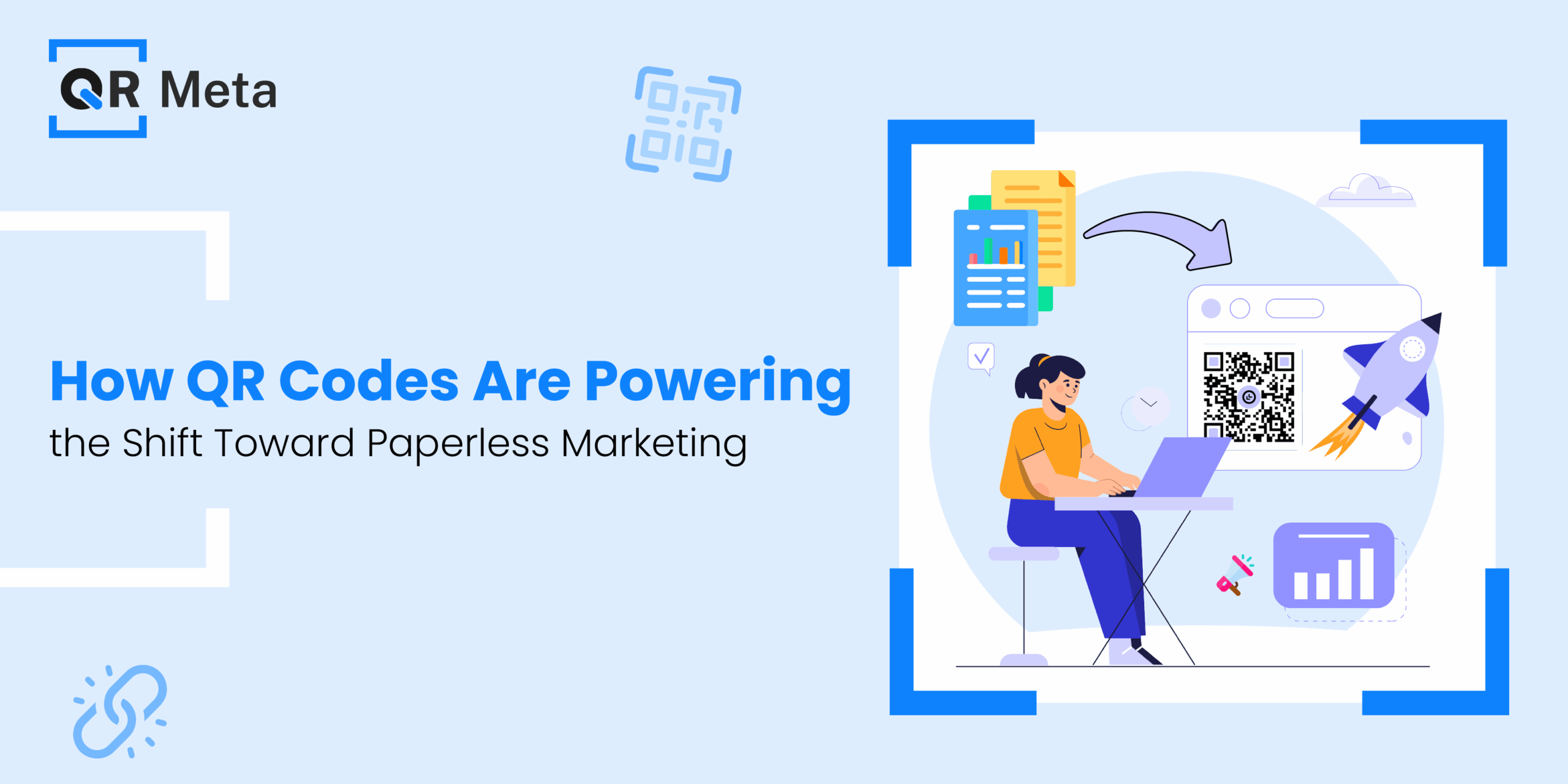
Companies are realizing there are better and smarter approaches to sharing information that are more sustainable, more cost-effective, and far more engaging. QR codes provide a way to link print to digital, while providing brands the opportunity to reduce their paper usage while still engaging their audience.
The Growth of Paperless Marketing
Digital marketing does not require a business to eliminate every single print it uses in one day. It prompts a re-imagining of how businesses share information in a world where almost every person is glued to their phone. Instead of giving out cumbersome brochures or menus that find their way into the trash, businesses are pursuing digital formats that are faster, cheaper, and easily accessible.
Today’s customers expect this convenience. They want the information now, not in a stack of printed paper they will likely never read. From retail to dining, the evidence is clear. People want the information delivered in a digital format, as they need it.
There is a larger reason for the shift as well, sustainability. Printing paper at scale costs money and creates waste, while going digital reduces the footprint for a business and customers, takes less space, all the while meeting the increasing demands of eco-friendly industries.
Why Are QR Codes Key to the Shift?
So, why are QR codes leading the charge into paperless marketing? It all comes down to three simple but strong reasons.
1. Immediate Access
Nobody wants to drag around a thick brochure or flip through pages of information anymore. With a QR code, the customer simply scans it with their smartphone camera and gets immediate access to a menu, information about product details, an event schedule, or even a video, and they don’t have to wait or type, then no starts and stops! The customer immediately gets the information they want.
2. Cost Reduction
Printing is costly. Whether it’s a menu, brochure, or catalog, re-printing every time you change prices or remove a promotion can add up really quickly. QR Codes present a solution. Rather than have to re-print thousands of copies of the brochure, catalog and then change them again when you change your promotions, you simply update the content behind the QR Code once, and anytime the customer scans it, they get the current version of it. That’s a win on both ends from a cost effective standpoint, and a timely standpoint.
3. Adaptability with Dynamic QR Codes
Static QR codes are static – in other words, once you print them, the link cannot be changed. Dynamic QR codes, on the other hand, give you ultimate adaptability. Want to change your menu, change a landing page, or start a new campaign? You can change to Paperless Marketing QR code that can update at any time without having to reprint. This makes your marketing not just more adaptable, but more future-proof as well.
Real-World Use Cases of Paperless Marketing with QR Codes

- Healthcare Clinics – Rather than giving patients hard copies of medical forms, appointment slips, etc., clinics can use QR codes to allow patients to scan and fill out or receive their forms or reports online.
- Educational Institutions – Educational institutions can replace handouts or brochures with QR codes that link students or parents to course materials, schedules, and event information.
- Tourism & Travel – Museums, tourist attractions, and travel companies can use QR codes to provide digital guides, maps, or itineraries so that guests do not need to print information in booklet form.
- Real Estate – Instead of carrying large bulking paper brochures, agents can use a QR code attached to a sign that says, “For Sale,” which links to a digital listing or includes galleries of photos or virtual tours of the property.
- Government Services – Instead of printed forms or notices, local governments can post a QR code that links citizens directly to online applications, bill pay, or online access to policies, rules, and laws.
- Fitness & Gyms – Instead of handing out training guides or class schedules, gyms can provide QR codes to link members to video tutorials, trainers’ biographies, or class booking sites.
The Advantages of Using QR Codes in Paperless Marketing
Go Beyond the Benefits of Going Paperless Marketing
1. A More Compelling Customer Experience
Let’s face it, no one really gets excited about reading through a paper brochure. But once a QR code takes a person directly to a product demo, a quick how-to video, or even a behind-the-scenes walkthrough, it changes the experience. Marketing suddenly becomes interactive and engaging instead of flat text on a page.
2. Marketing that is Able to be Measured
Here’s the difference: with paper you can never know if a person even paid attention or opened the brochure. With QR codes, as soon as your brochure is scanned, you know the where, when, AND what device was used to scan it. All of this data gives you the opportunity to leverage campaigns and record them instead of guessing.
3. Differentiating Your Brand
A black-and-white QR code is a general symbol. When you choose to use your brand colors, logos, etc., it becomes part of your design. The QR code then does more than link – it represents your brand. And when that QR code is scanned, the user will associate that seamless experience with your business.
4. Reducing Expenses While Standing Firm
Think of how often a business needs to update their menu, posters, or flyers. Each time, you have to purchase the new printing. Using a dynamic QR code, you can edit the link, and not the paper. That will save you expenses on printing and give you a more reasonable budget for actual growth endeavors.
5. Developing Trust Through Transparency
Clients want to know more about where the product is from. Is it safe? What did other buyers think? Rather than provide tiny text with a small section of the details per your state regulation, a QR code might provide that for you, and save room. This is a simple way to convey to clients that you have nothing to hide and build trust for the long haul.
How Businesses Can Make the Transition Smoothly?

Transitioning to a Paperless Marketing with QR codes does not mean you have to flip your entire marketing upside down overnight. The truth is, the best version of starting to go paperless is to take it one step at a time:
- Start Small with Hybrid Campaigns : If you are still primarily using print, don’t toss it away tomorrow. Instead, you can begin by adding in QR codes to what you already print such as flyers, posters, or business cards. In this way, you are giving your audience the old-school print way of consuming information – if they want to and the quick-scan option for more information.
- Start by Replacing High-Volume Paper Assets : Menus, brochures, event tickets, etc., are some of the most recycled/updating items and are typically the most expensive to print. By swapping these out for QR-based digital pieces, you will see savings immediately and get rid of many paper products. You can look at it like having more results at somewhat less effort.
- Take Advantage of Dynamic QR Codes for Flexibility : Static codes are a one-and-done. Dynamic QR codes allow you to change the destination link any time, and don’t require reprinting the codes. This is especially valuable for businesses that offer promotional discounts regularly, such as retailers running seasonal promotions or service providers updating pricing.
- Use Branded Codes for Visibility : Don’t use boring black-and-white squares for your QR codes. Incorporate your logo, colors and make the code part of your overall design scheme. When your code looks like it belongs to your business, the likelihood of the receiver scanning it goes up.
The Larger Context : QR Codes and Marketing’s Future
QR codes are not merely a trend; they have a role in the larger digital transformation that is reshaping the way businesses communicate with people. Here are the reasons why:
- Part of Digital Transformation
Consumers expect speed and mobile-friendly options today. Whether it’s for payment, product information, or a check-in for an event, QR codes fit the mobile-first lifestyle, which is what the customer journey should be today, after all, It’s about the customer journey.
2. Not a Quick Trend
When QR codes first blew up a few years back, some people thought they would not last long. Today, with smartphones in every hand and digital payments being the main mode of payment, QR codes have never been more relevant. In fact, companies treating QR codes as an everyday tool and not just a promotional tactic – are the ones that will continue to shape how we market ourselves.
3. Balancing Convenience and the Earth
QR codes are great because they simultaneously stand to benefit the customer and the earth. They are convenient for customers and interactive. They benefit the business by eliminating unnecessary costs. Finally, they aid the environment by reducing unnecessary paper from the printed materials. What a truly win-win-win for everyone.
Final Thoughts : Simple Scan, Tremendous Benefits
If you’re like most reading this piece and you’ve only seen standard QR codes, they may appear to be blocks with little going on. However, behind that seemingly generic square are enormous, job-saving opportunities. They are enabling companies to reduce printing waste and costs, as well as provide customers greater interactivity in a way they truly enjoy.
And here is the real beauty of it all: QR codes effortlessly help eliminate the division between offline and online worlds in a way you never thought possible. A simple scan turns an ad on paper to a video, a product package to a digital walkthrough, or a business card to a detailed portfolio.
The bottom line is this, switching to QR codes on your platforms is not about saving trees – it’s about saving money and creating a better overall experience for your customer, while elevating a brand towards modernity and sustainability that is prepared for the future.