


Industrial workplaces are evolving rapidly with the adoption of smart technologies, automation, and digital systems. Manufacturing plants, warehouses, construction sites, and production facilities are constantly searching for ways to improve efficiency, reduce downtime, and enhance workplace safety. One technology that is making a major impact across industries is the use of QR codes on machinery.
Traditional industrial processes often rely on printed manuals, paperwork, and static machine safety labels that can become damaged, outdated, or difficult to access during emergencies. Workers may spend valuable time searching for maintenance records, operating instructions, or troubleshooting guides, which slows productivity and increases operational risks.
QR codes provide a simple yet highly effective solution to this problem. By placing industrial QR code labels directly on machinery and equipment, businesses can give employees instant access to critical information through a quick smartphone or scanner scan. This creates faster workflows, smarter maintenance systems, and safer industrial environments.
Today, industries worldwide are using QR-enabled equipment identification labels, barcode asset tracking systems, and QR laser engraving technologies to modernize operations and simplify machine management.
What Are QR Codes on Machinery?
QR codes on machinery are scannable digital codes attached to industrial equipment, tools, machines, or production systems. These codes connect workers directly to digital content related to the equipment.
Once scanned, the QR code can instantly provide:
- Machine manuals
- Safety instructions
- Maintenance records
- Inspection reports
- Troubleshooting guides
- Training videos
- Spare part information
- Compliance documentation
- Asset tracking data
Unlike traditional labels that contain limited printed text, QR codes provide access to unlimited digital information. This allows businesses to maintain cleaner machine safety labels while still giving workers complete operational guidance.
Because QR codes are highly flexible, they can be updated digitally without replacing the physical label itself. This makes them extremely practical for industrial operations where equipment information changes frequently.
Why Industries Are Adopting Industrial QR Code Labels?
Modern industrial environments require fast access to accurate information. Delays caused by missing manuals or outdated paperwork can negatively affect productivity and safety.
Industrial QR code labels solve many of these challenges by digitizing information access.
Faster Access to Information
Workers no longer need to search through storage cabinets or maintenance offices to find machine documents. A quick scan instantly opens the required information on a smartphone or tablet.
This improves response times during:
- Equipment failures
- Maintenance procedures
- Operator training
- Safety inspections
In fast-paced industrial settings, even a few minutes saved can significantly improve productivity.
Improved Workplace Safety
Safety is one of the biggest reasons businesses implement QR codes on machinery.
Traditional machine safety labels often contain only basic warnings due to space limitations. QR codes allow companies to provide more detailed digital instructions without overcrowding the physical label.
Workers can instantly access:
- Emergency shutdown instructions
- PPE requirements
- Hazard warnings
- Lockout/tagout procedures
- Safety training materials
- Compliance guidelines
This improves workplace awareness and helps reduce accidents caused by human error.
Reduced Equipment Downtime
Machine downtime is expensive for industrial businesses. Delays in accessing troubleshooting information or maintenance instructions can increase repair times.
QR codes help technicians quickly locate:
- Repair procedures
- Service history
- Replacement part information
- Diagnostic instructions
As a result, maintenance teams can resolve issues faster and minimize production interruptions.
Better Industrial Asset Tracking
Large facilities often manage hundreds or thousands of assets. Without efficient tracking systems, equipment can become difficult to monitor.
QR-enabled industrial asset tracking allows businesses to:
- Track machine locations
- Monitor maintenance schedules
- Record inspection history
- Manage asset inventories
- Reduce equipment loss
This improves operational visibility and simplifies asset management processes.
Machine Safety Labels Are Becoming Smarter
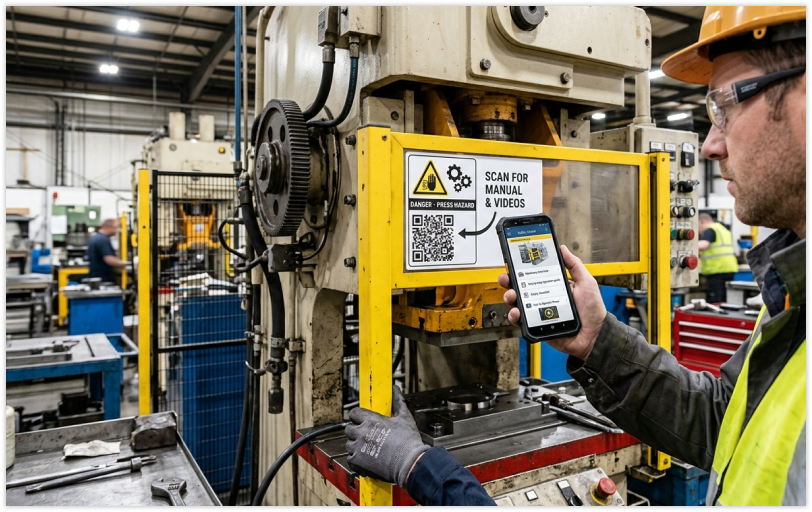
Machine safety labels have always played an important role in industrial environments. However, traditional labels have limitations because they can only display a small amount of information.
Modern QR-powered machine safety labels provide a much smarter solution.
Instead of printing long instructions directly onto the label, companies can use QR codes to connect workers to complete digital resources.
These resources may include:
- Video tutorials
- Multi-language instructions
- Interactive safety procedures
- Compliance certificates
- Maintenance checklists
This is especially useful in facilities with diverse workforces where employees may speak different languages or operate complex machinery.
By digitizing safety information, companies improve communication while keeping labels clear and easy to understand.
Equipment Identification Labels for Industrial Operations
Equipment identification labels help organizations identify and organize industrial assets efficiently. Adding QR codes to these labels significantly improves their functionality.
A modern equipment identification label may include:
- Asset ID numbers
- Serial numbers
- Manufacturer details
- Installation dates
- Calibration records
- Maintenance schedules
- Inspection logs
When scanned, the QR code opens a complete digital profile for the machine.
This allows maintenance teams, operators, and inspectors to access accurate information instantly without relying on paper records.
QR-based equipment identification labels are especially useful for:
- Manufacturing plants
- Warehouses
- Construction companies
- Logistics facilities
- Utility operations
Industrial Asset Tracking with QR Technology
Industrial asset tracking is one of the most important applications of QR codes in modern facilities.
Tracking large numbers of machines, tools, and industrial equipment manually can be difficult and time-consuming. Traditional spreadsheets or paperwork often lead to errors and inefficiencies.
QR codes simplify industrial asset tracking by creating a digital management system.
Benefits of QR-Based Asset Tracking
Simplified Maintenance Management
Maintenance teams can track:
- Service intervals
- Repair history
- Inspection dates
- Replacement schedules
Reduced Equipment Loss
Better tracking reduces misplaced or lost equipment.
Improved Operational Efficiency
Centralized digital records reduce paperwork and manual data entry.
As industries continue embracing digital transformation, QR-enabled industrial asset tracking is becoming increasingly valuable.
Barcode Asset Tracking vs QR Code Systems
Many businesses currently use barcode asset tracking systems. While barcodes remain useful, QR codes provide several important advantages.
| Feature | Traditional Barcode | QR Code |
| Data Storage | Limited | High Capacity |
| Scan Direction | Single Angle | Multi-Angle |
| Error Correction | Minimal | Advanced |
| Digital Content Access | Basic | Extensive |
| Information Sharing | Limited | Dynamic |
QR codes can store much more information and provide direct access to online content, making them more suitable for modern industrial operations.
Businesses transitioning from barcode asset tracking to QR systems often experience better efficiency and faster information access.
QR Laser Engraving for Harsh Environments
Industrial environments can expose labels to:
- Heat
- Chemicals
- Moisture
- Dust
- Abrasion
- Outdoor weather conditions
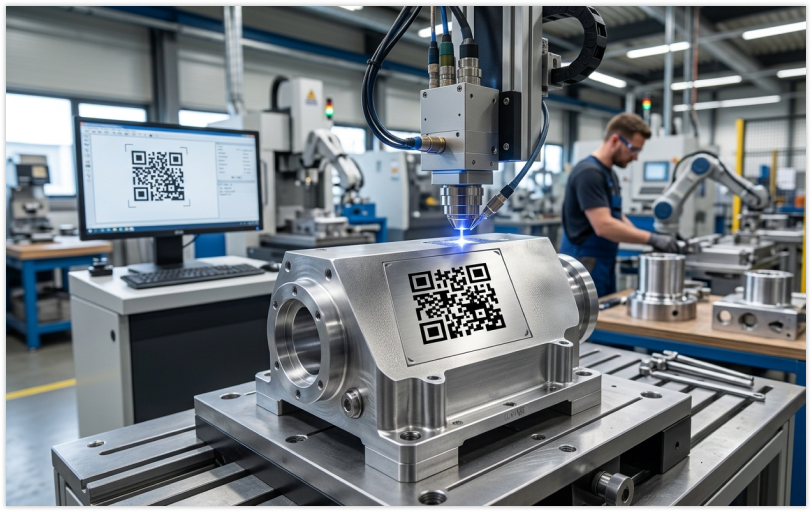
Standard printed labels may fade or become damaged over time. QR laser engraving provides a durable alternative.
With QR laser engraving, QR codes are permanently etched onto:
- Stainless steel plates
- Aluminum tags
- Industrial equipment surfaces
- Heavy machinery components
Advantages of QR Laser Engraving
Resistance to Harsh Conditions
They withstand chemicals, heat, and physical wear.
Permanent Identification
Unlike stickers, engraved QR codes cannot peel off easily.
Reliable Scanning
Clear engravings improve scanning performance even in industrial conditions.
Industries such as aerospace, automotive manufacturing, heavy equipment production, and oil & gas commonly use QR laser engraving for equipment identification.
Features of a Good Industrial QR Code Printer
High Print Quality
Sharp QR codes improve scanning accuracy.
Fast Production Speed
High-volume facilities require quick label printing.
Material Compatibility
Industrial printers should support:
- Polyester labels
- Vinyl labels
- Metal tags
- Synthetic materials
Durable Printing
Labels must resist fading, chemicals, and moisture.
A high-quality QR code printer industrial setup ensures businesses can maintain reliable labeling systems for long-term industrial use.
Industrial Labels That Improve Operational Efficiency
Industrial labels are no longer limited to basic identification purposes. Today, they function as digital communication tools that connect workers directly to important operational data.
Smart industrial labels help companies:
- Reduce downtime
- Improve maintenance efficiency
- Strengthen workplace safety
- Simplify audits and compliance
- Enhance productivity
By integrating QR codes into industrial labels, businesses can modernize workflows and reduce dependence on paper documentation.
This supports broader Industry 4.0 initiatives focused on automation and digital transformation.
Safety Equipment Labels and Regulatory Compliance
Safety equipment labels are essential for maintaining compliance in industrial workplaces.
Many regulations require businesses to clearly identify:
- Emergency equipment
- Hazardous machinery
- Electrical systems
- Fire safety devices
- Lockout/tagout procedures
QR-enhanced safety equipment labels provide additional benefits by linking workers directly to:
- Safety instructions
- Inspection records
- Compliance documents
- Training materials
- Maintenance procedures
This helps businesses maintain stronger compliance while improving workplace safety awareness.
How QR Codes Improve Preventive Maintenance
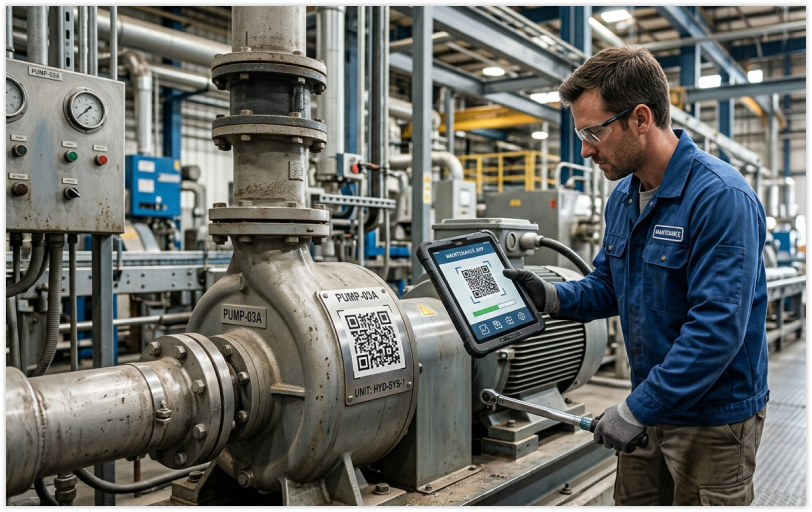
Preventive maintenance helps businesses avoid costly machine failures by servicing equipment regularly before problems occur.
QR codes simplify preventive maintenance processes by giving technicians instant access to:
- Maintenance schedules
- Service instructions
- Repair records
- Spare parts lists
- Inspection checklists
Technicians can also update digital records immediately after completing maintenance tasks.
This creates more accurate maintenance histories and improves long-term equipment reliability.
Industries Benefiting from QR Codes on Machinery
QR code systems are now widely used across multiple industries.
Manufacturing
Factories use QR codes for:
- Machine maintenance
- Production monitoring
- Equipment tracking
- Safety compliance
Warehousing and Logistics
QR labels improve:
- Inventory management
- Asset tracking
- Equipment identification
Construction
Construction companies use QR codes for:
- Equipment inspections
- Operator manuals
- Safety documentation
Food Processing
Facilities implement QR systems to manage:
- Sanitation records
- Compliance tracking
- Equipment maintenance
Automotive Industry
Manufacturers use QR technology for:
- Part identification
- Machine diagnostics
- Production system management
The Future of Smart Industrial Labeling
As industries continue embracing automation and digital systems, QR codes will become even more important.
Future industrial QR systems may integrate with:
- IoT devices
- AI maintenance platforms
- Cloud-based monitoring systems
- Real-time analytics software
This will create fully connected industrial ecosystems where machines, workers, and management systems communicate more efficiently.
QR codes are no longer just simple labels. They are becoming essential tools for industrial digital transformation.
Final Thoughts
QR codes on machinery are revolutionizing industrial operations by providing instant access to manuals, maintenance records, and safety instructions.
From machine safety labels to industrial asset tracking, QR technology helps businesses improve efficiency, reduce downtime, and strengthen workplace safety.
Whether companies use equipment identification labels, barcode asset tracking systems, industrial QR code labels, or QR laser engraving solutions, QR technology offers a practical and scalable approach for smarter industrial management.
As industrial environments continue evolving, businesses that adopt QR-enabled systems will be better positioned to improve productivity, simplify maintenance, and support long-term digital transformation.
FAQs
1. Why are QR codes used on machinery?
QR codes allow workers to instantly access machine manuals, maintenance records, troubleshooting guides, and safety instructions through a smartphone or scanner.
2. What are industrial QR code labels?
Industrial QR code labels are durable labels designed for harsh environments that provide digital access to equipment information.
3. How does industrial asset tracking work with QR codes?
QR codes help businesses digitally track equipment, maintenance history, inspections, and asset locations.
4. What is the advantage of QR laser engraving?
QR laser engraving creates permanent, highly durable QR codes resistant to heat, chemicals, and abrasion.
5. Are QR codes better than traditional barcode asset tracking?
Yes. QR codes store more information, support digital content access, and scan from multiple angles more efficiently than traditional barcodes.
6. What industries use QR codes on equipment?
Manufacturing, construction, logistics, food processing, aerospace, and automotive industries commonly use QR-based machinery labeling systems.