

Transportation hubs are becoming smarter, faster, and more digitally connected than ever before. Airports, railway stations, metro systems, bus terminals, and logistics centers now rely heavily on digital tools to improve passenger experiences and simplify operations. One technology playing a major role in this transformation is the QR code.
From accessing live schedules to navigating complex transit systems, QR codes are helping passengers receive instant information with a simple smartphone scan. As cities continue investing in smart mobility solutions and intelligent transportation systems, QR technology is becoming an essential part of modern transportation infrastructure.
Today’s travelers expect speed, convenience, and real-time updates. They no longer want to search through crowded information boards or wait in long customer service lines. QR-powered transportation systems solve these challenges by delivering instant digital access to schedules, maps, navigation tools, and transit information.
In this blog, we’ll explore how QR codes are improving transportation hubs, enhancing passenger experiences, and supporting the growth of smart transportation systems worldwide.
The Growing Role of Smart Transportation Systems
Modern cities are rapidly adopting smart transportation systems to manage increasing traffic, urban mobility, and passenger demands. These systems use digital technologies to improve transportation efficiency, safety, and accessibility.
Smart transportation solutions focus on:
- Real-time transit information
- Digital ticketing
- Traffic optimization
- Passenger communication
- Contactless experiences
- Smart navigation
QR codes fit perfectly into these systems because they provide fast, affordable, and user-friendly access to digital services.
Whether used in airports, metro stations, or public transit networks, QR technology helps transportation authorities simplify information sharing while improving convenience for passengers.
How QR codes Are Used in Transportation Hubs?
QR codes can be placed throughout transportation hubs to provide passengers with instant access to important information.
These QR systems are commonly used for:
- Live schedules
- Platform information
- Interactive maps
- Route navigation
- Digital tickets
- Passenger instructions
- Transit updates
- Emergency notifications
Passengers simply scan the code using their smartphones and receive real-time information immediately.
This reduces confusion, improves navigation, and creates a smoother travel experience.
Smart Mobility Solutions and QR Technology
Smart mobility solutions aim to make urban transportation more connected, efficient, and sustainable.
QR codes support smart mobility by enabling:
- Contactless communication
- Digital passenger services
- Real-time transit updates
- Self-guided navigation
- Mobile ticket access
Transportation systems are increasingly integrating QR codes into buses, train stations, ride-sharing services, parking systems, and smart city infrastructure.
As urban populations continue growing, QR-powered smart mobility systems help cities improve transportation management while reducing operational complexity.
QR code Navigation for Passengers
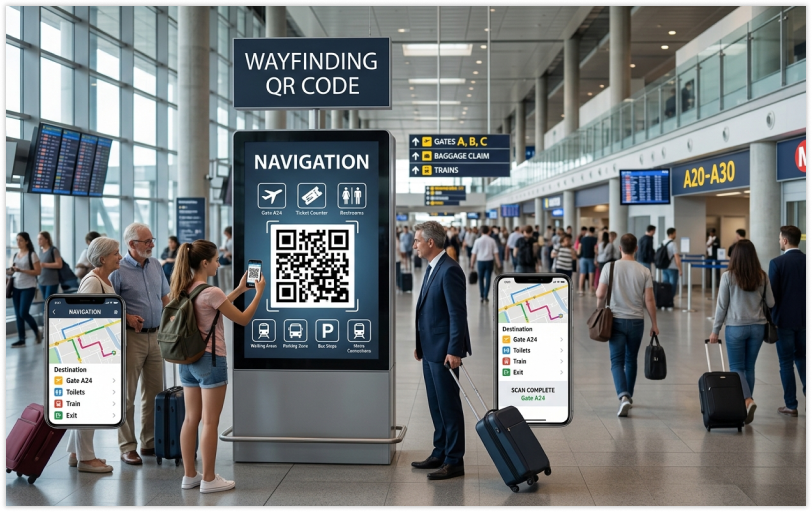
Large transportation hubs can often be confusing for travelers, especially tourists or first-time visitors.
QR code navigation systems help passengers quickly find:
- Boarding platforms
- Ticket counters
- Restrooms
- Exit gates
- Waiting areas
- Parking zones
- Bus stops
- Metro connections
Instead of depending entirely on physical signage, passengers can access digital maps and directions through a quick scan.
This improves accessibility and reduces stress during travel.
QR navigation is especially useful in:
- Airports
- Metro stations
- Railway terminals
- Smart city transit hubs
Intelligent Transportation Systems and Real-Time Information
Intelligent transportation systems use advanced technologies to improve transportation efficiency and passenger communication.
QR codes enhance these systems by giving passengers direct access to:
- Live arrival times
- Traffic alerts
- Delay notifications
- Route changes
- Transit schedules
- Service announcements
Real-time updates help passengers make faster travel decisions and avoid unnecessary delays.
Transportation authorities also benefit because QR systems reduce pressure on help desks and customer service teams.
Public Transport Technology Is Becoming More Digital
Public transport technology has evolved significantly over the past decade. Traditional paper tickets and static schedules are gradually being replaced by digital systems.
QR technology supports this transformation by enabling:
- Mobile ticketing
- Contactless boarding
- Digital schedules
- Smart transit communication
- Passenger feedback systems
Many modern transportation networks now allow passengers to:
- Scan QR tickets directly from their phones
- Access route information instantly
- Receive service alerts in real time
This creates faster and more efficient travel experiences.
Transportation Technology and Contactless Travel
Contactless systems have become increasingly important in modern transportation.
Passengers now prefer touch-free experiences for:
- Ticket validation
- Information access
- Navigation
- Payments
- Customer support
QR-powered transportation technology helps reduce physical interaction while improving convenience.
This is especially valuable in crowded transportation hubs where speed and efficiency are essential.
Smart City Transportation and Digital Connectivity
Smart city transportation focuses on integrating digital infrastructure into urban mobility systems.
QR codes support smart city transportation by connecting passengers directly to:
- Transit apps
- Smart maps
- Traffic updates
- Ride-sharing platforms
- Parking information
- Public transport schedules
Cities worldwide are using QR technology to modernize transportation networks while improving urban mobility experiences.
QR-powered systems also support sustainability goals by reducing paper usage and improving operational efficiency.
Transit Information Systems Improve Passenger Experiences
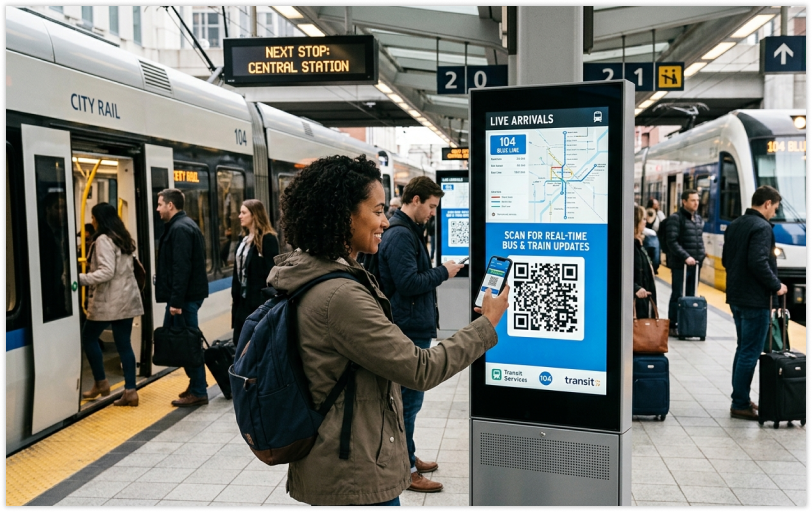
Transit information systems help passengers access transportation data quickly and accurately.
QR codes improve these systems by simplifying how information is delivered.
Passengers can instantly view:
- Train schedules
- Bus arrival times
- Route maps
- Service disruptions
- Transit instructions
This creates a more reliable and user-friendly travel environment.
Modern transit information systems also help transportation authorities communicate updates more effectively during emergencies or delays.
Mobility Management Systems and QR Integration
Mobility management systems help coordinate multiple transportation services within cities and transportation networks.
QR integration improves these systems by enabling:
- Faster passenger communication
- Digital service access
- Smart mobility tracking
- Efficient navigation
- Contactless interactions
As cities continue adopting integrated transportation systems, QR codes will play an even larger role in connecting passengers with transportation services seamlessly.
Benefits of QR codes in Transportation Hubs
Instant Access to Information
Passengers receive schedules, maps, and updates immediately through a simple scan.
Improved Navigation
QR-based navigation helps travelers move through complex transportation hubs more easily.
Real-Time Updates
Transportation authorities can update information instantly without replacing printed materials.
Reduced Printing Costs
Digital systems reduce the need for paper schedules, maps, and signage.
Contactless Passenger Experience
QR technology supports safer and more hygienic travel environments.
Better Passenger Satisfaction
Quick access to information improves overall travel convenience and reduces confusion.
Challenges of Traditional Transportation Information Systems
Traditional transportation systems often rely heavily on:
- Printed schedules
- Static maps
- Announcement boards
- Manual customer assistance
These systems can create several challenges:
- Outdated information
- Language barriers
- Passenger confusion
- High printing costs
- Limited accessibility
QR-powered systems solve many of these problems by digitizing passenger communication.
The Future of QR Codes in Transportation
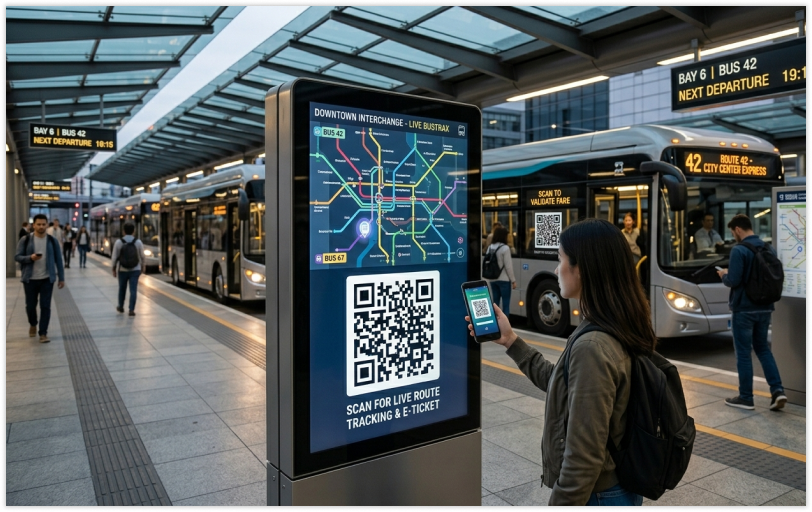
As transportation systems become smarter, QR technology will continue evolving alongside:
- Artificial intelligence
- Smart city infrastructure
- IoT transportation systems
- Autonomous mobility platforms
- Real-time analytics
Future QR-powered transportation systems may include:
- Personalized route guidance
- AI-based travel recommendations
- Augmented reality navigation
- Predictive transit updates
QR codes are becoming more than simple digital links. They are now an important part of modern intelligent transportation systems.
Final Thoughts
QR codes are transforming transportation hubs by making schedules, navigation, and passenger information more accessible and efficient.
From smart transportation systems and public transport technology to intelligent transportation systems and smart mobility solutions, QR technology is helping cities modernize urban travel experiences.
Whether used for QR code navigation, transit information systems, or smart city transportation, QR-powered solutions improve convenience, reduce confusion, and support the future of connected mobility.
As digital transportation continues evolving worldwide, QR codes will remain a key technology for creating smarter, faster, and more user-friendly transit systems.
FAQs
1. How are QR codes used in transportation hubs?
QR codes provide passengers with instant access to schedules, maps, navigation tools, tickets, and real-time transit updates.
2. What are smart transportation systems?
Smart transportation systems use digital technologies to improve traffic management, passenger communication, and transportation efficiency.
3. How does QR code navigation help travelers?
QR code navigation helps passengers quickly locate platforms, exits, routes, and transportation services through digital maps and directions.
4. What are smart mobility solutions?
Smart mobility solutions are digital transportation systems designed to improve urban mobility, efficiency, and passenger convenience.
5. Why are QR codes important in public transport technology?
QR codes improve contactless travel, simplify information access, reduce printing costs, and enhance passenger experiences.
6. What are intelligent transportation systems?
Intelligent transportation systems use advanced technologies such as real-time communication, analytics, and automation to improve transportation operations and safety.