

For 2025, QR codes have matured from simple scan-and-go tools to intelligent connections for customer engagement, enabling that shift. Businesses are now using dynamic QR codes to measure real-time performance, understand audience behavior, and update campaigns in real-time, all from one dashboard. What once seemed like a tech trend, is now a vital need for brands that prefer agile, measurable, and connected experiences.
Across sectors, including retail and healthcare, QR codes are changing the way companies close the gap between physical and digital experiences. For example, with QR Meta, marketers, retailers, and service organizations can design smart branded QR codes that do not solely link, but inform, engage, and convert.
Let’s explore how disparate industry settings are implementing QR technology in 2025, and why this simple scan has morphed into one of the most effective tools in modern business.
1. Retail & Consumer Goods
QR codes are on the rise in retail and consumer goods.
- Brands are placing QR codes on packaging so that shoppers can scan the code to receive product data, authentication, origin, or join a loyalty program.
- For example: The shift from barcodes to QR codes is emerging; giving brands more storytelling and engagement real estate.
- Why it is important: Whenever a customer scans a code directly at the shelf, you have created an immediate connection between the real world and a digital experience. Even better, you can collect data.
Takeaway: If you sell products, having a dynamic QR code on your packaging or label will almost certainly be necessary in 2025.
2. Hospitality and Food Services
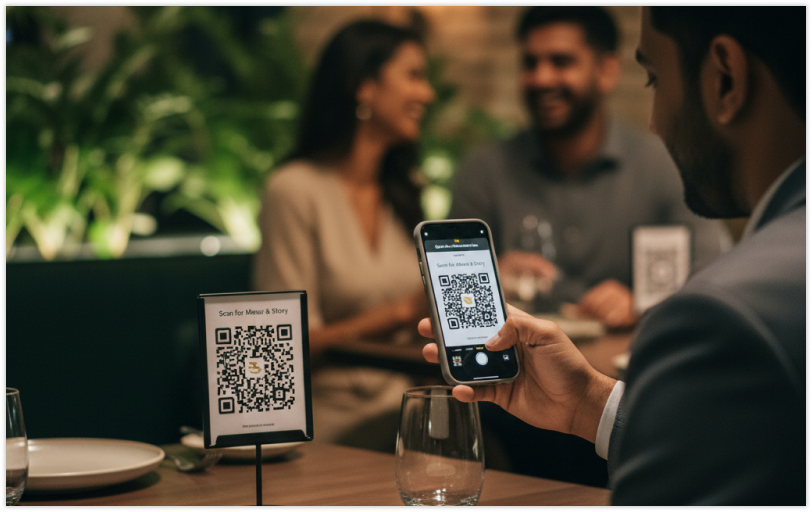
QR codes are more than ubiquitous in restaurants, through cafes and fine dining.
- Digital menus, order via phone scanning, contactless payment and more – all powered by QR codes.
- What is good about this type of engagement for the customer: ease of guest experience, quicker service, less print cost, and more versatility (e.g., if you want to change your menu daily without throwing away your QR code/print).
- Bonus: You can also implement a QR code at tables, checkout counters, or integration with loyalty and signup systems.
Takeaway: If you’re in the food services and hospitality industries, a QR code well-placed will both enhance service and provide access to data about your customers.
3. Health and Pharmaceuticals
Here, we see some creatively smart uses of QR codes.
- Health care apps create a QR code check-in for patients or simply access to secure digital health-records. Medicare apps use Dynamic QR codes for scheduling appointments or tracking a medication prescription and delivery system.
- Why it works: QR codes eliminate friction, increase accuracy, and reduce risk and improve safety across all environments (very important in compliance or regulatory environments).
Takeaway: There are many operational and patient advantages in health care when it is easier for patients to access information about themselves, and QR codes enable convenient access to useful information.
4. Events, Entertainment & Ticketing
Whether it’s concerts, conferences, or exhibitions – QR codes are easing entry and event engagement.
- E-tickets with QR codes, instant registration through QR code, and interactive experiences (scan a code for bonus content) are trending.
- Beyond check-in: QR codes are being leveraged for increased engagement (maps, schedules, exclusive content) as well as their potential for data collection on participation.
Takeaway: If you are producing events or are part of the entertainment segment, QR codes should be part of your attendee-journey plan.
5. Manufacturing, Supply Chain & Logistics
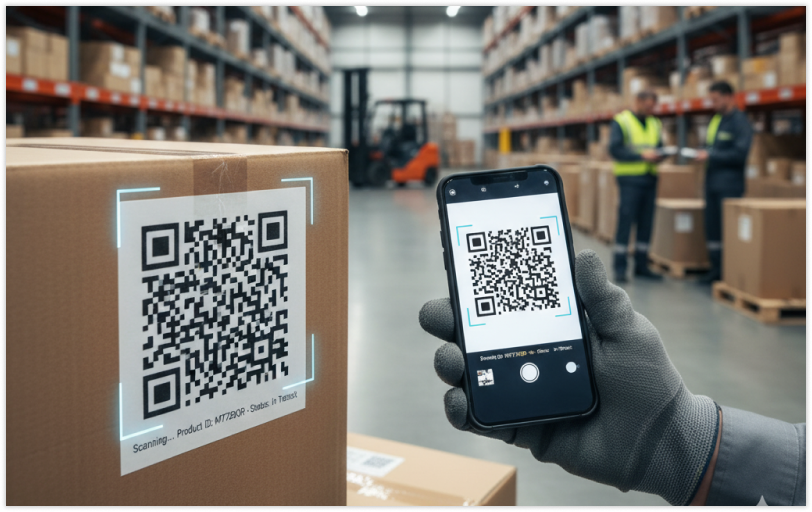
Often under the radar, but very impactful – QR codes are bringing efficiencies to these segments.
Companies are utilizing Dynamic QR codes as part of tracking shipments, inventory management, authentication of product, and again against counterfeiting.
Similarly, as the means to package and to label products evolves, QR-enabled packaging is a great way to deliver transparency and traceability.
Takeaway: If your business touches manufacturing or logistics, QR codes are not just the latest trend, they are practical tools for efficiency as well as compliance.
6. Financial Services and Payments
QR codes are changing the way we pay and transact.
Mobile payments via QR code are huge in markets like Asia-Pacific and fast-growing others.
Banks, fintechs, and retailers all use QR code payment methods, loyalty scans, and contactless payment experiences.
Takeaway: If you work in finance, retail, or any space involving payments, QR codes will continue to be core to providing modern, seamless service.
Why QR Codes Are So Engaging Across Industries

- Offline / online bridge: A printed advertisement or package becomes interactive simply with a scan.
- Low hurdle of entry: Most people have a smartphone; scanning a QR code is easy and quick.
- Trackable and dynamic: With dynamic QR Codes you can change the destination and track scans – meaning you can learn what works and doesn’t work.
- Flexible uses: Payments, menus, inventory, marketing – Dynamic QR Codes can meet many needs.
- Cost effective: Once printed, QR Codes are free to use, after the first deployment, but can provide ongoing value.
How can you use QR codes in your industry?
Even if you are not one of the big industries mentioned above, here are some practical suggestions highlighting QR codes:
- Include a QR code on your product packaging that leads to FAQ or how-to videos or user guides.
- Have a QR code printed at your restaurant table (or physical location) to obtain customer feedback or join a loyalty program.
- Provide your event attendees with a QR code to use that opens to their schedule, venue map or exclusive content.
- For service providers, print a Dynamic QR code onto a business card or invoice to allow clients to seamlessly book an appointment or chat.
- In retail, have a QR code at the point of sale for instant offers sign-up or digital receipts.
Final Considerations
2025 is the year QR codes transition from just being “nice to have,” to “need to have” for every industry. If your organization or business continues to be dismissive of Dynamic QR codes and is thinking that they’re a gimmick, you’re losing a very real opportunity to connect, engage and measure.
Whatever industry you’re in, start to think of where in your space you can install a QR code so the next logical step your customer can take is to scan it.
Start small and track what happens, and go from there. When time and expense meet, and a physical touchpoint is now a digital touchpoint in 0.5 seconds, that’s when you’re playing the future and not just watching it.
FAQs
1. Why are QR codes becoming so popular in 2025?
Because they connect physical and digital experiences instantly making interactions measurable, faster, and more convenient for businesses and customers alike.
2. Which industries benefit the most from QR codes?
Retail, hospitality, healthcare, events, logistics, and finance are leading the way with innovative QR applications.
3. What’s the difference between static and dynamic QR codes?
Static codes are fixed, while dynamic codes can be updated anytime and provide tracking analytics for better insights.
4. How can small businesses use QR codes effectively?
They can use QR codes for menus, offers, feedback, digital receipts, or to share product info all without needing complex tech setups.
5. Are QR codes safe to use?
Yes, when created through secure platforms like QRMeta.io, QR codes are safe and can even include verification features to prevent misuse.