
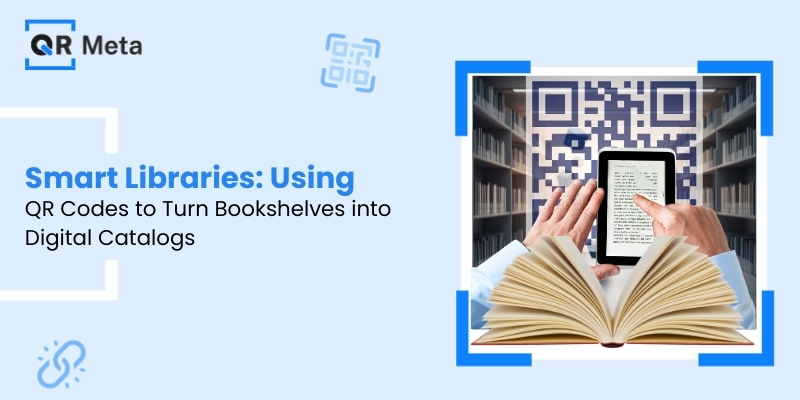
Libraries are no more just silent places with shelves full of books; rather, they are turning out to be intelligent and interactive places through simple technology, similar to how QR codes in education are transforming classrooms and e-learning experiences. One of the simplest ways in which you can easily upgrade your library without making any costly changes is through QR codes for libraries, enabling conventional bookshelves to function as intelligent digital catalogues.
In order to avoid the tedious task of manual searching for information from the shelves and through printed signs, QR codes provide an easy-to-use system, and QRMeta allows such libraries to build QR codes for libraries without the involvement of payment.
What Are Smart Libraries?
An intelligent library uses modern technologies to enhance user access, exploration, and interaction with books and other sources. One of the technologies that are particularly useful is QR code technology in libraries since it is easy, cheap, and available to everyone who owns a smartphone.
QR codes can be placed on shelves, sections of a library, or even books, helping users understand how QR codes handle different types of information such as text, PDFs, and digital catalogs.
Turning Bookshelves into Digital Catalogs
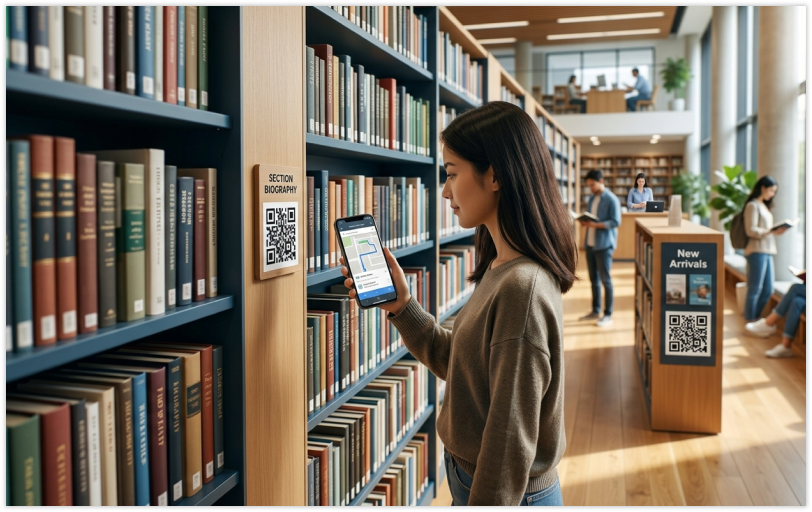
Think about visiting a library where a QR code can be seen stuck on a bookshelf. Rather than guessing what could be on offer, one simply scans the QR code, thereby gaining access to a list of books found on that particular bookshelf, including:
- A list of books available on that shelf
- The genre or Categories (such as fiction or science)
- Range of books on the shelf
- Availability status
- Library regulations for the area
This transforms a static shelf into a digital library catalog system, making navigation faster and more intuitive.
How QRMeta Powers This Experience?
The QRMeta tool provides an easy way for libraries to generate QR codes as per their requirements. The emphasis is on information generation and not monetary transactions. It making the QRMeta system an excellent choice for education and public spaces.
QRMeta as the perfect tool for implementing a smart library:
This is how QRMeta seamlessly integrates within a library environment:
1. Website QR Codes
Associate a QR code on the shelf with a website that contains a list of all books on the particular shelf.
2. PDF QR Codes
Offer downloadable content such as catalogues, reading lists, or guidelines.
3. Text QR Codes
Provide short descriptions of books or categories or shelves.
4. Event QR Codes
Promote any upcoming events at the library.
5. Wi-Fi QR Codes
Allow users immediate access to library Wi-Fi by scanning QR codes.
6. Social Media QR Codes
Facilitate following of the library social media page through scanned QR codes.
7. Image QR Codes
Provide information visually.
Real-Life Use Case Of Smarter Shelves
Here is an easy-to-understand scenario. QR code is put on “Science and Technology” shelf. The following data is revealed when scanning:
- List of books arranged according to different categories (artificial intelligence, robotics, physics, etc.)
- Range of shelf (SCI-100 to SCI-250)
- Recently arrived books
- Borrowing policy for the particular section
Alternatively, QR code near the entrance can contain:
- Library policies and regulations
- Membership details
- Library opening hours
This method decreases confusion, saves time, and enhances user experience.
Benefits of QR Code-Based Library Systems
1. Easy Navigation
No need for help from any personnel to get what is required.
2. Instantaneous Changes
The information can be changed instantly without changing the physical label.
3. Cost-Efficient
No need to use digital displays and complicated systems.
4. No Touch Required
Ideal for today’s world where there is a preference for minimal touch.
5. Increased Interaction
Interaction makes engagement better and more interesting.
Why QR Codes Are the Future of Library Management?
As libraries adapt to digital standards, QR code solutions for libraries offer a bridge between traditional systems and modern technology. They do not make books obsolete; rather, they make reading and understanding them easier.
By utilizing software such as QRMeta, libraries can maintain order and informativeness without becoming overly complicated.
Final Thoughts
Smart libraries don’t mean removing books for screens; they are simply aimed at providing better access to information through such methods as QR codes, which can allow any library bookshelf to serve as an informational source.
For anyone wishing to create a smart library without putting too much effort into it, QRMeta is an excellent starting point.
FAQs
1. How do QR codes work in libraries?
QR codes in libraries are placed on shelves, books, or sections. When scanned, they provide instant access to digital information like book lists, categories, rules, or guidelines related to that specific area.
2. What information can a library QR code display?
A library QR code can show book catalogs, shelf details, library rules, PDFs, event information, Wi-Fi access, or links to websites and social media pages.
3. How does QRMeta help in creating smart libraries?
QRMeta allows libraries to generate different types of QR codes such as website, PDF, text, event, and Wi-Fi QR codes. These can be used to share organized and updated information without physical changes.
4. Are QR codes in libraries used for payments?
No, QRMeta focuses on informational use cases. QR codes are used to provide access to content like catalogs, rules, and resources not for payment processing.
5. What are the benefits of using QR codes in a library system?
QR codes improve navigation, provide real-time updates, reduce printing costs, and offer a contactless way for users to access information quickly.
6. Can QR codes replace traditional library catalogs?
QR codes don’t replace traditional catalogs but enhance them by making information more accessible and interactive through smartphones.
7. Is it easy to update information linked to QR codes?
Yes, with platforms like QRMeta, you can update the linked content anytime without needing to reprint or replace the QR code.