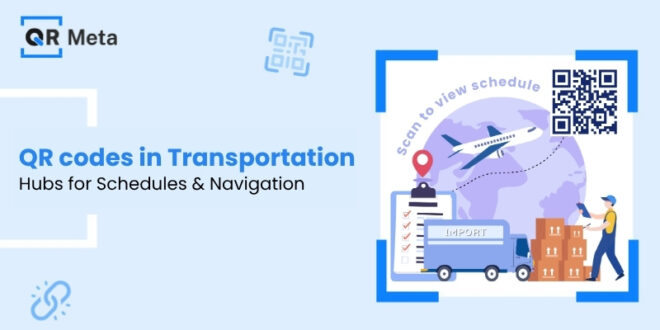


In the current era of digitization, efficiency is not just a necessity but a must. Individuals need quick access to information without having to go through lengthy procedures, while companies try their best to find means that can help them save time. The simplest tool which helps people do this is known as a QR Code. With its help, people can interact with information without having to enter data manually.
The modern world requires speed and precision from its users. Entering links, filling long forms, or writing down details for any products manually may not only be very time-consuming but also involve human errors that may affect the process negatively. Here comes QR codes as a simple yet effective method.
QR codes stand for quick response code, and they are a revolution regarding simplicity and usability. Because of them, users receive access to needed data instantly without typing anything at all. The difference seems negligible, but it makes the whole difference in terms of efficiency and preciseness.
The Problem with Manual Input
Data entry using the keyboard has always been one of the activities carried out in day-to-day operations, whether through manually entering website addresses, completing forms, or providing information for payments. Although this activity may appear simple at first glance, it is not without its problems. Typos, latency, and repetitive processes decrease efficiency and make the activity tedious for the individual undertaking it.
Moreover, manual data entry contributes to increased friction within the journey of the user. As the number of required actions increases, the probability of abandonment also increases.
QR Codes as a Smart Alternative
The issue is resolved easily by using QR codes since these codes act as a connection between the physical and digital worlds. The need for typing long strings of text is eliminated, and one can simply scan the QR codes through their phone cameras and see what they need. The codes can be used to access websites, menus, make payments, contact information, and even a WiFi hotspot.
The most significant benefit of using QR codes is that all these functions become easier without any effort from the user’s end.
Enhancing Speed and Accuracy
One of the greatest advantages of using QR codes is that of time-saving. If something would take several minutes through manual data entry, with the help of QR codes, it could easily be accomplished within seconds. In busy places, where there might be a large number of visitors, like a shopping mall or transport hub, this time-saving may prove to be very useful.
The other great advantage that QR codes offer is that of accuracy. Since all the data required is stored in the codes themselves, there won’t be any scope for errors during the manual input of data. The consumer will be directed to precisely where they need to be, which may be a particular web page or even a secure transaction site.
How To Simplify the Process With QR Code?
There is no need for any manual effort, and everything works flawlessly every time because the possibility of mistyping the URL or any other information is excluded completely.
The problem is solved using QR codes because they establish an interface between the physical and digital worlds. Instead of manually entering any information into your smartphone, you simply scan a QR code. And in a few seconds, you have access to all the content you need.
Enhancing the User Experience
As it happens in our modern times, people seek convenience and usability while interacting with others. This is precisely what QR codes offer, providing users with a quick scan-and-go process. There’s no need for remembering any URL addresses or installing additional applications.
Easy availability leads to greater interaction. That is to say, it becomes easier for users to browse a particular product, sign up on a website, or even buy something.
Efficiency in Business and Cost Saving
When it comes to businesses, however, there are more benefits than just convenience for the end users. Using QR codes is very efficient operationally because it saves huge amounts of money that are otherwise spent on manual procedures such as printing out documents and doing other tasks.
It is also convenient for the employees too. With the help of QR codes, the employees can keep track of their stock and other assets without keying it in manually.
Main Advantages of Using QR Codes
1. Fast and Convenient
It only takes seconds to scan a QR code, and there’s no need for going through numerous processes to access the required information.
2. Reduced Possibility of Errors
There’s no manual input involved; therefore, there’s no chance of mistakes.
3. Better User Experience
The scan and go interaction offers a much better experience than filling forms manually or doing other tedious work.
4. Operational Efficiency
With QR codes, businesses are able to automate several processes and save their time.
5. Contactless Interaction
QR codes have become more popular because they offer contactless interaction.
6. Affordable Marketing Approach
In terms of the costs associated with marketing their products and services, QR codes are highly effective since it is not necessary to print heavy marketing materials such as brochures and advertisements, but it is possible to print QR codes on posters, boxes, or websites to direct customers to their website.
7. Efficient Information Storage
Unlike ordinary barcodes, QR codes have the ability to store more information, including letters, digits, and even pictures. Therefore, QR codes can be applied in various sectors.
Real World Applications
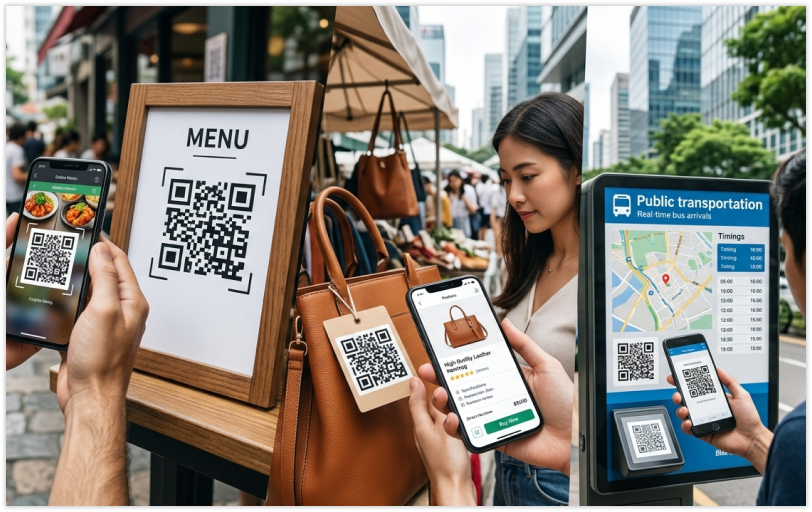
QR codes have been implemented in different fields like:
- Retail: For gaining easy access to information about products, offers, or online payment
- Restaurant: Menu and ordering without physical interaction
- Healthcare: Patient registration and access to patient record
- Marketing: Redirecting to marketing campaigns, landing pages, or download apps
- Events: Ticketing and fast registration
In all cases, the benefit remains the same, that is, no typing is needed.
Supporting Contactless and Safe Interactions

The emergence of contactless technology has further hastened the popularity of QR codes. As seen in the pre and post-pandemic era, both companies and consumers favored options that would not require touching. In addition to the safety aspect, the convenience of using the codes without any direct interaction makes them more appealing.
Furthermore, the benefit of speed without having to handle anything else besides one’s phone is highly valued.
The Future of QR Code Technology
As technology keeps on advancing, the use of QR codes is only going to increase in our daily lives. Through technological advancement, especially in the mobile world, the application of QR codes is sure to increase. There are dynamic QR codes that can enable changes of information without any change in the code.
The combination of new technologies like AR (augmented reality) can give QR codes even more potential. But one thing that will always be at its core is eliminating the requirement of manual input.
Conclusion
QR codes are not simply for convenience; they are a means by which the problems of manual data entry can be resolved. Not only do QR codes prevent errors, save time, and improve the experience of using digital systems, but they will soon prove indispensable as their use becomes more prevalent.
FAQs
1. What is a QR code and how does it work?
A QR (Quick Response) code is a type of barcode that stores information in a square pattern. When scanned using a smartphone camera or QR scanner, it instantly directs the user to digital content such as a website, form, or payment page without requiring manual input.
2. How do QR codes eliminate manual data entry?
QR codes remove the need to type information manually. Instead of entering URLs, contact details, or payment data, users simply scan the code and are automatically directed to the correct destination, reducing time and errors.
3. Are QR codes safe to use?
QR codes themselves are safe, but users should scan codes from trusted sources. Businesses can enhance security by using secure links (HTTPS) and verified platforms to ensure safe interactions.
4. Do users need a special app to scan QR codes?
Most modern smartphones have built-in QR code scanning capabilities within their camera apps. In some cases, users may choose to download a dedicated QR scanner for additional features.
5. Can QR codes be used for payments?
Yes, QR codes are widely used for digital payments. Users can scan a code to instantly access a secure payment gateway, making transactions faster and more convenient without entering card details manually.